
We hadn't exactly planned to visit Córdoba this summer. But when our friend from Seattle told us she'd be spending the day there with her parents-visiting from Berlin-we jumped on the idea. We realized Córdoba is not only incredibly close to Málaga (our home base), but it's also a natural stopover on the AVE train line between Málaga and Madrid.
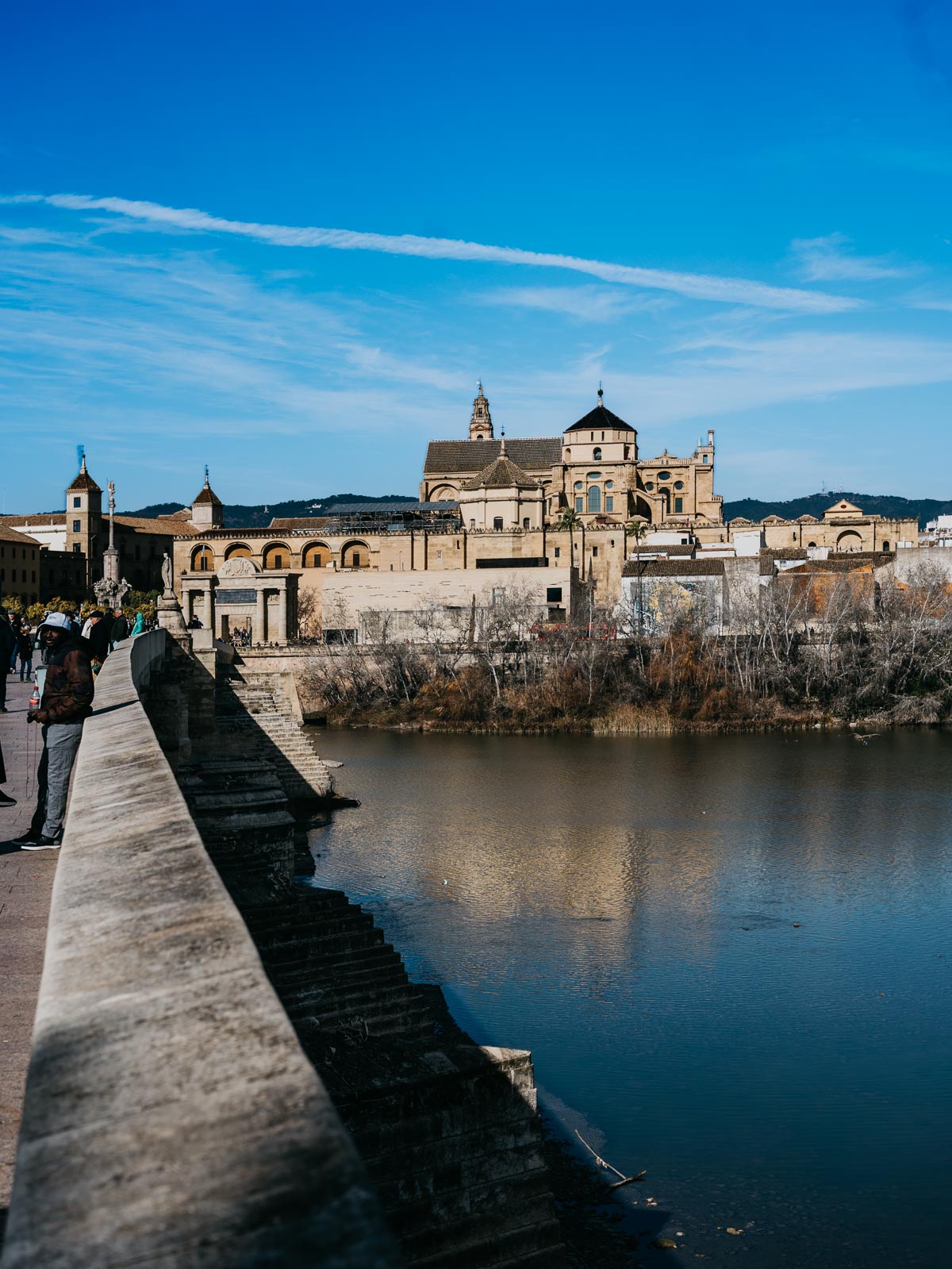
So we did what slow travel is all about: we made a last-minute decision to spend one day in Córdoba, meet up with our friend, explore a city we had somehow never truly visited, and then continue on to Madrid later that evening. It turned out to be a day full of culture, flavors, golden light, and unexpected beauty.
Getting There by Train (The Green Way)
From Málaga María Zambrano, the high-speed AVE train whisks you to Córdoba in just under 1 hour and 45 minutes. It's fast, smooth, and climate-conscious-a win for both the planet and your itinerary.
Another option is the company Iryo, which offers low-cost trains, similar to the new French Avenue competitor.
If you're based in Málaga-or exploring Andalusia by train-Córdoba is one of the most rewarding day trips you can make.
Morning: The Mezquita-Catedral & Córdoba's Old Soul
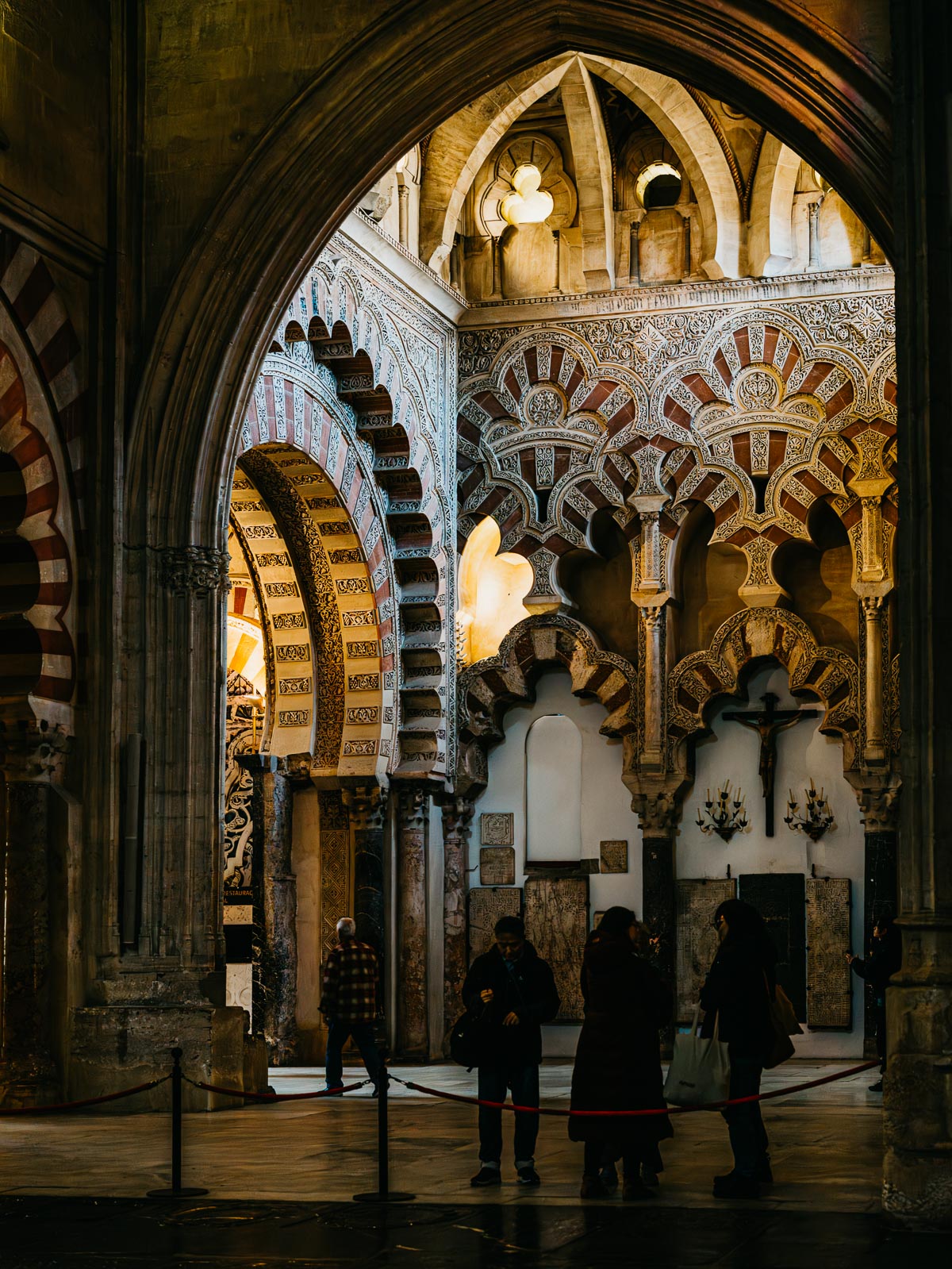
Córdoba's most iconic site is the Mezquita-Catedral, and it lives up to every expectation.
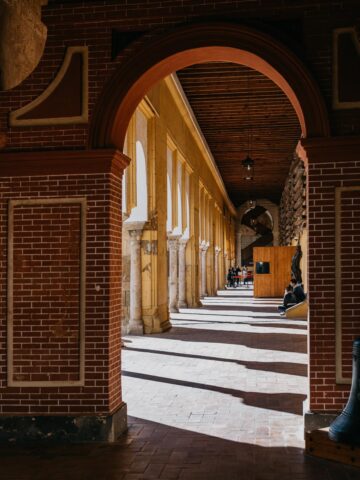
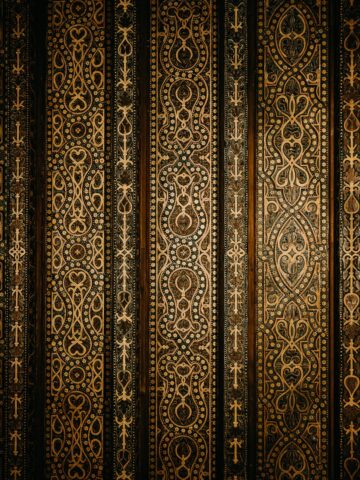
We entered through the Puerta del Perdón and stepped into the peaceful Patio de los Naranjos. Orange trees and Moorish fountains offered the perfect pause before heading inside. Once within the Mezquita itself, it was like stepping into another dimension: endless horseshoe arches, striped red-and-white like a mirage, supported by nearly 900 columns of jasper, granite, and marble.

Built as a mosque in 784 AD under the rule of the Umayyad dynasty, the Mezquita became one of the most important Islamic monuments in the western world. But in the 13th century, after Córdoba was reclaimed by Christian forces, a cathedral was literally built within the mosque. Walking through, you'll see Gothic, Renaissance, and Baroque elements inserted into the original Islamic structure-an architectural palimpsest unlike anything else in Europe.
Despite the religious contrast, the space flows together in its own mystical way. It's this bold juxtaposition of civilizations, spiritual expressions, and aesthetic languages that makes the Mezquita-Catedral so awe-inspiring-and why it's a UNESCO World Heritage Site.
Exploring Córdoba: Historic Streets, Arches & Alleys
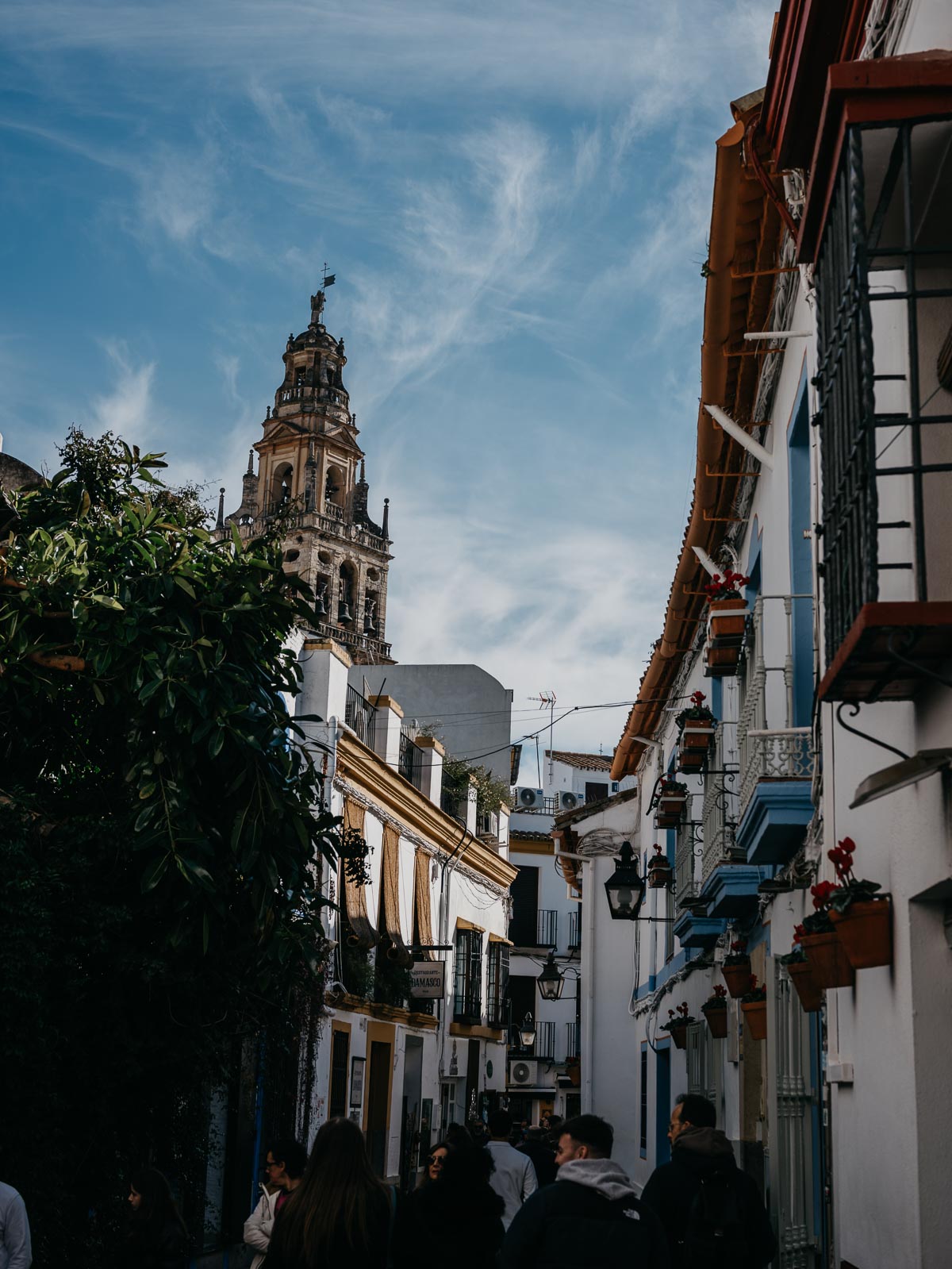
From the Mezquita, we wandered through the Judería, the city's former Jewish quarter. This part of town is a labyrinth of narrow streets and traditional whitewashed houses, many adorned with climbing bougainvillea and blue flower pots.
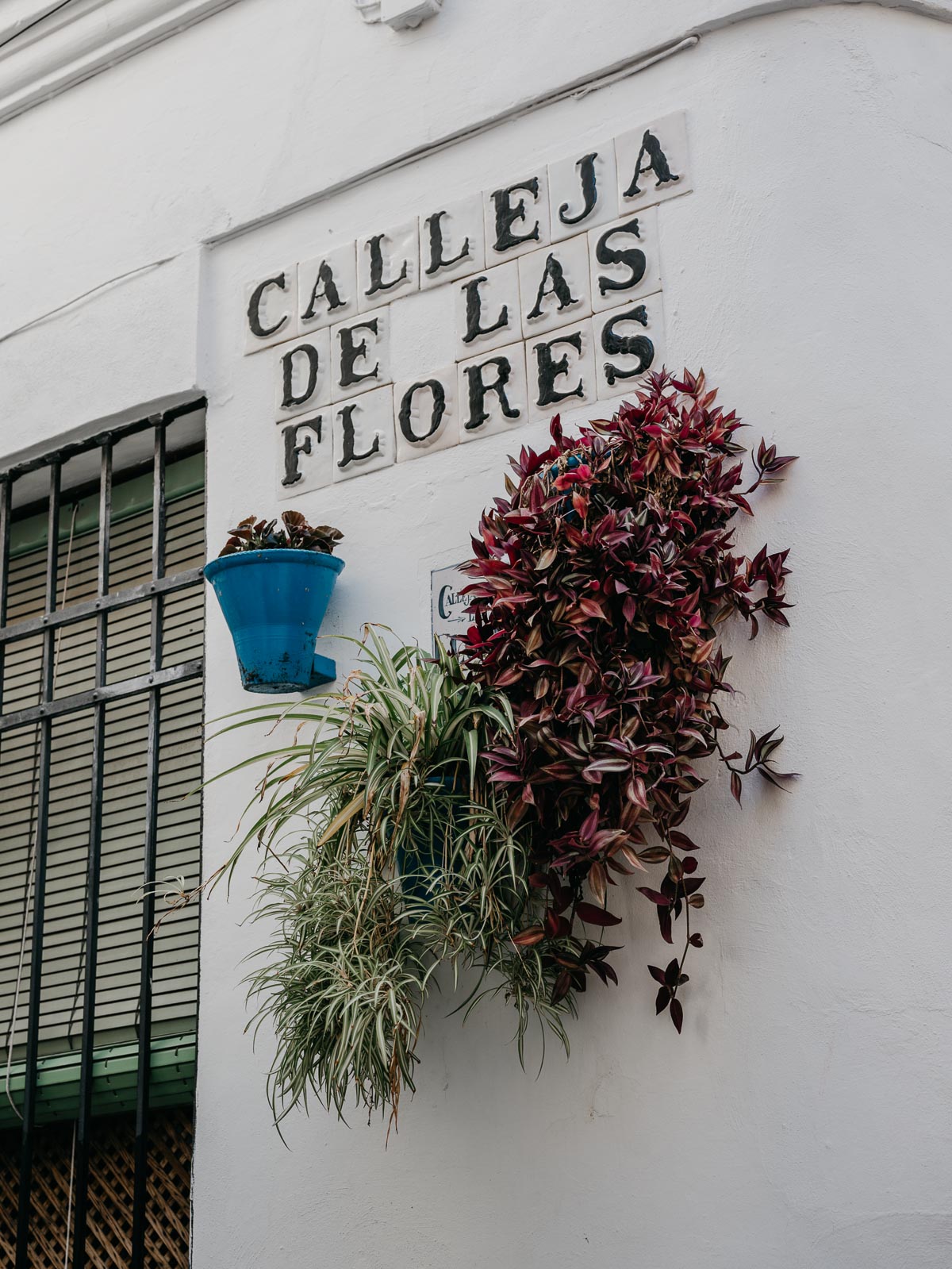
The Calleja de las Flores gave us our postcard moment-looking up to see a framed view of the Mezquita's bell tower through layers of blossoms and balconies. Don't miss Calleja del Pañuelo, one of Europe's narrowest streets, where the city feels intimate and time seems to stop.
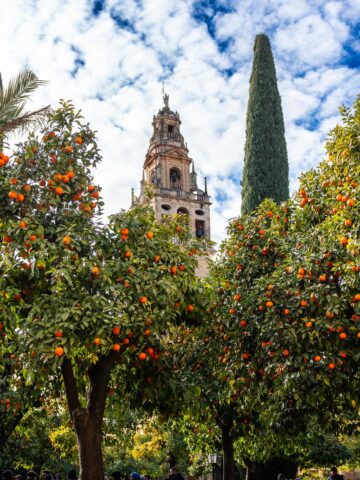
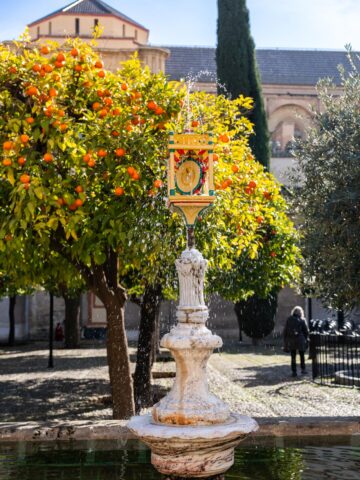
Nearby, the Plaza del Cardenal Salazar and its surrounding architecture reflect the evolution of Andalusian civic space-from quiet courtyards to formal squares lined with fountains, ceramic tiles, and orange trees.
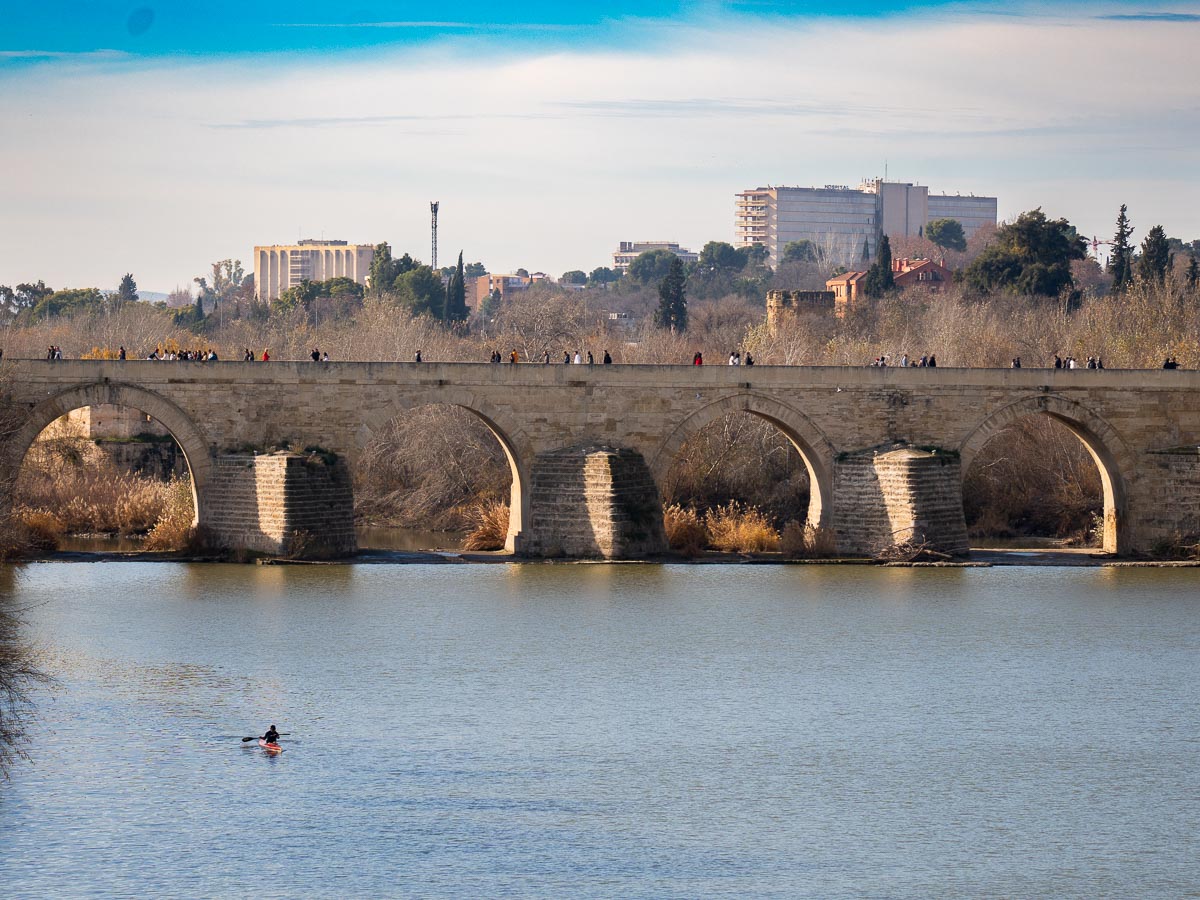
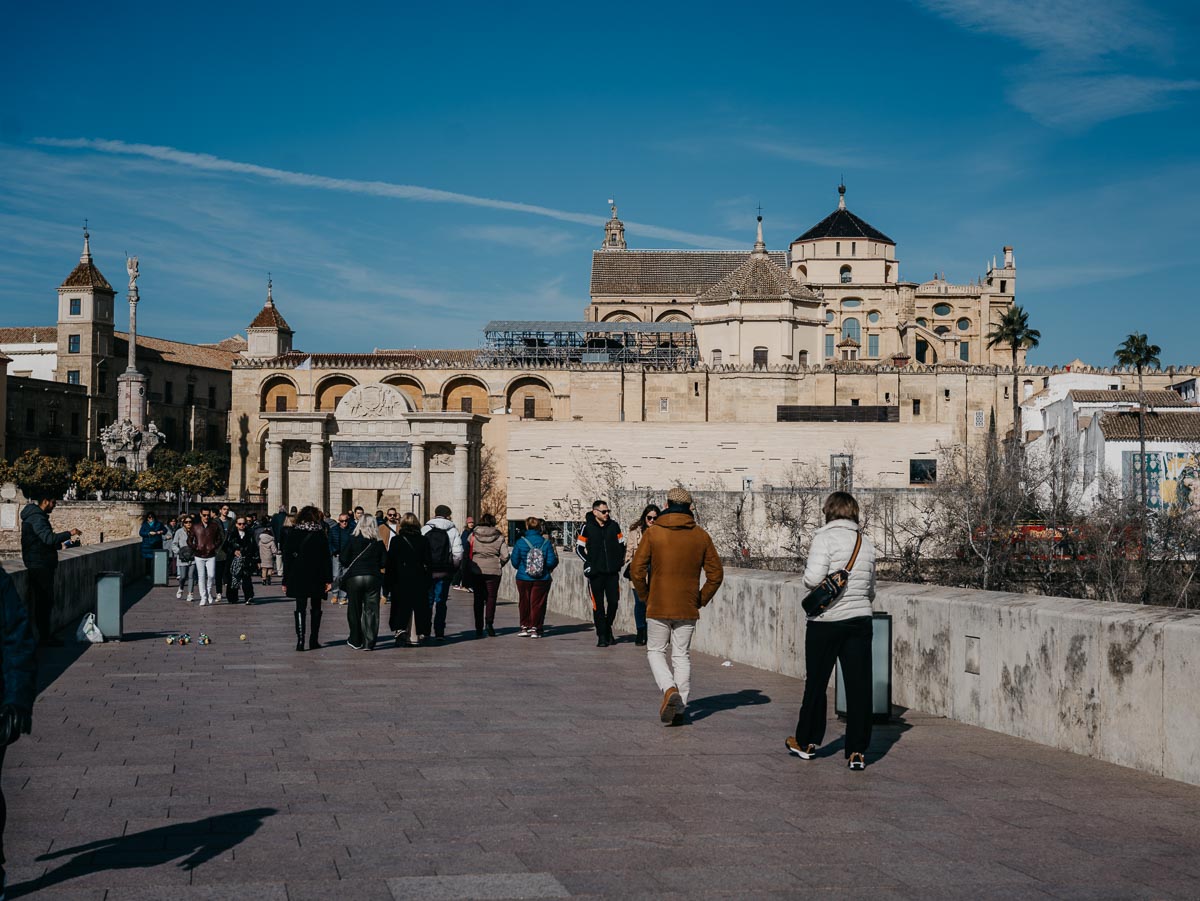
We also crossed the Puente Romano, originally built by the Romans in the 1st century BCE. Rebuilt several times throughout history, it still serves as a living connection between the old town and the tower of Calahorra. Standing in the middle of the bridge at golden hour, the views of the Mezquita's silhouette against the river are magical.
Just a few minutes' walk from the main historic sites, the Roman Temple of Córdoba is easy to overlook-but absolutely worth a stop. Tucked between modern buildings near the Plaza de las Tendillas, its towering Corinthian columns stand as a powerful reminder of the city's Roman roots. While most travelers rush from the Mezquita to the bridge, we loved pausing here-it's quiet, free to visit, and gives yet another layer to Córdoba's endlessly rich history.
Want to Recharge? Córdoba Has Green Spaces To
Although Córdoba is best known for its architecture, there are also lovely places to pause in nature.
We recommend:
- Parque de Miraflores, across the Roman Bridge: a riverfront park with sculptures, open lawns, and views of the Mezquita from a distance.
- Jardines de la Agricultura: a shaded park with tall palm trees, fountains, and quiet corners to read or picnic.
- Jardines de la Victoria, near the city center, for a local feel and tree-lined paths surrounded by cafés and kiosks.
If you're visiting in spring or early summer, Córdoba's famed patios also bloom with color and scent-private courtyard gardens that often open to the public during the Festival de los Patios in May. Even outside the festival, some are open year-round.
A Day of Flavors: Córdoba's Plant-Based Side
Lunch at a local food restaurant
Before our Mezquita visit, we had a long, relaxed lunch at Casa Pepe de la Judería, right across from the Plaza del Cardenal Salazar. Don't let the Michelin star intimidate you-the vibe here is welcoming, the prices fair, and the food unforgettable.
Some standout dishes we shared:

- Berenjenas con miel de caña: Crispy fried eggplant with sugarcane molasses (100% plant-based and one of Córdoba's must-try specialties).
- Patatas bravas: Done with a smoky, garlicky kick-absolutely addictive.
- Vegetarian croquetas: Golden and creamy inside, without any meat or fish.
With a glass of local Montilla-Moriles wine in hand, we sat outside and let the rhythm of the square settle us into Córdoba's slower pace. We had a Verdejo from Finca La Cañada (Sierra de Montilla), which was outstanding and reasonably priced.
Another Michelin-starred recommendation, just a couple of steps away, is Taberna El Nº 10, and it is even more affordable. Their Mazamorra and seasonal vegetable salad are outstanding.
If you want to know more about what and where to eat in Malaga and its surroundings, don't miss our post entirely dedicated to the topic.
Afternoon Bite: Manolas Empanadas Cordobesas
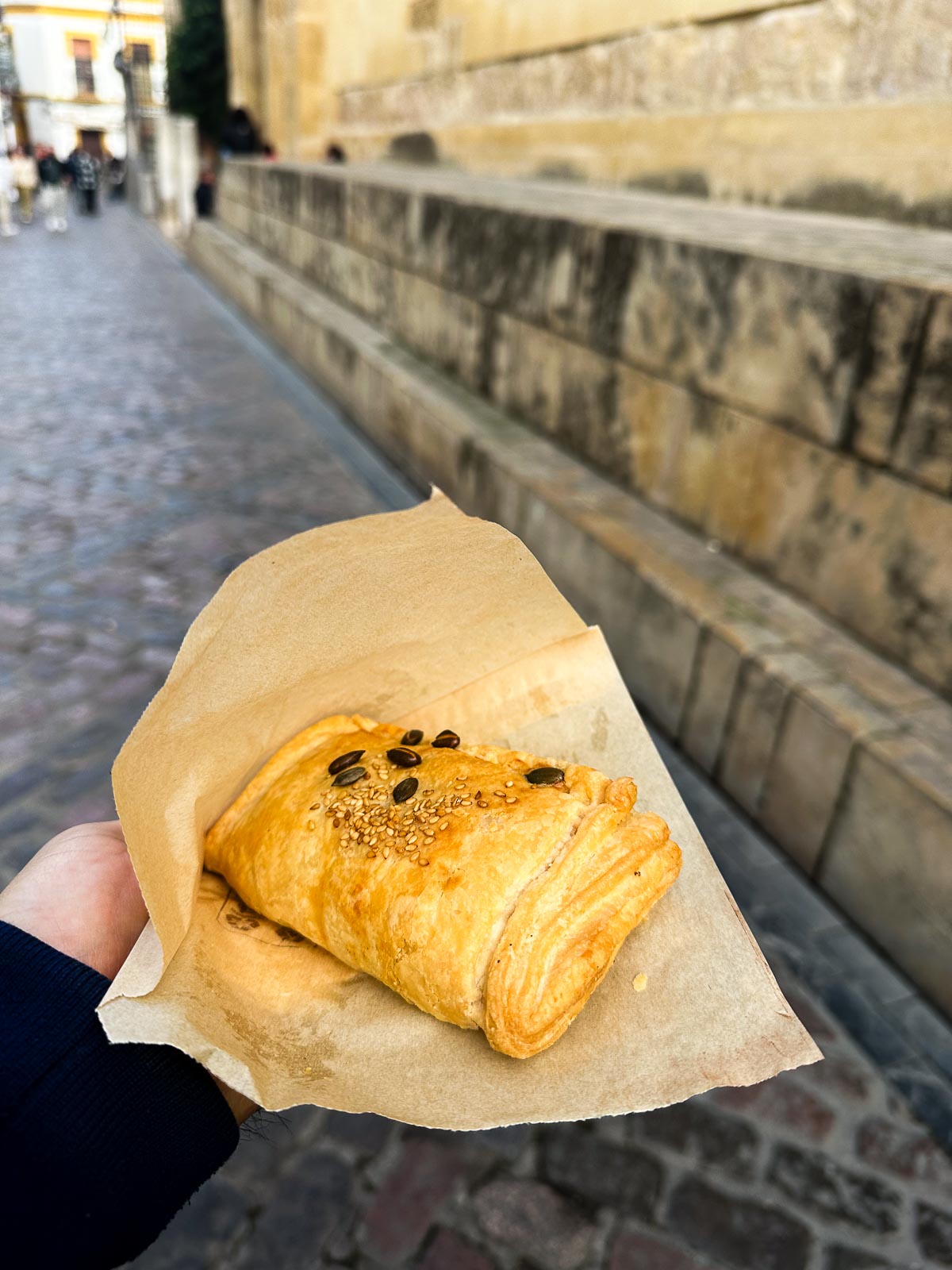
Later in the day, post-Mezquita, we stopped for a snack at Manolas Empanadas Cordobesas, located right in front of the Patio de los Naranjos. Their vegan empanadas are perfect for mid-afternoon fuel-light, flaky, and stuffed with roasted vegetables, caramelized onions, or mushrooms.

We grabbed them to go and sat on a shaded bench nearby, sharing bites and stories.
Golden Hour Aperitivo at Bar Santos
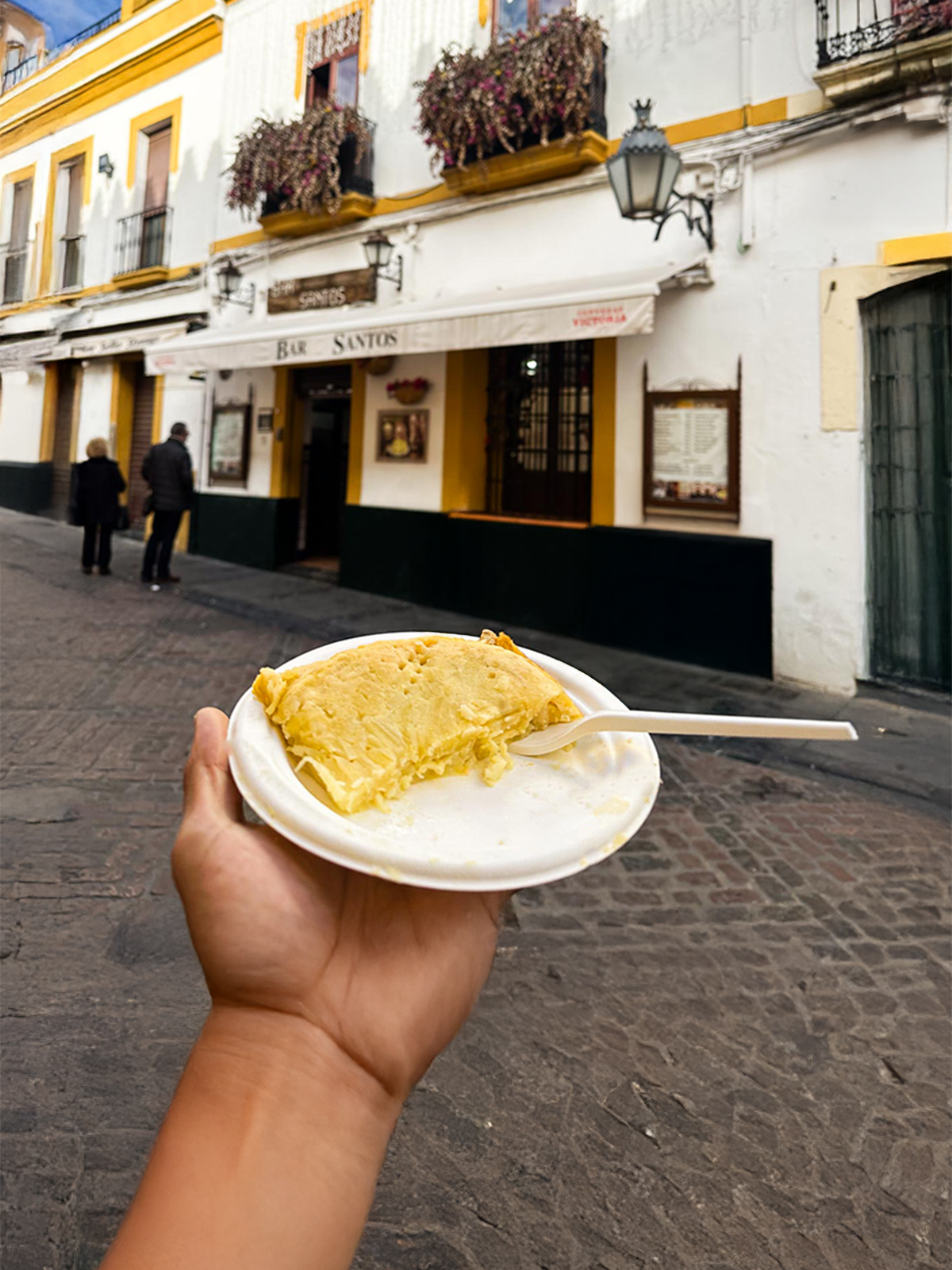
Around 6 PM, it was time for an aperitivo. We headed to Bar Santos, just beside the Mezquita, famous for its massive tortilla de patatas-cut like slices of cake.
We ordered a cold beer and a glass of Montilla-Moriles, stood outside with locals and travelers alike, and soaked up the golden hour. The energy of the place-informal, joyful, timeless-was one of the highlights of the day.
Sweet Ending: Pastel Cordobés

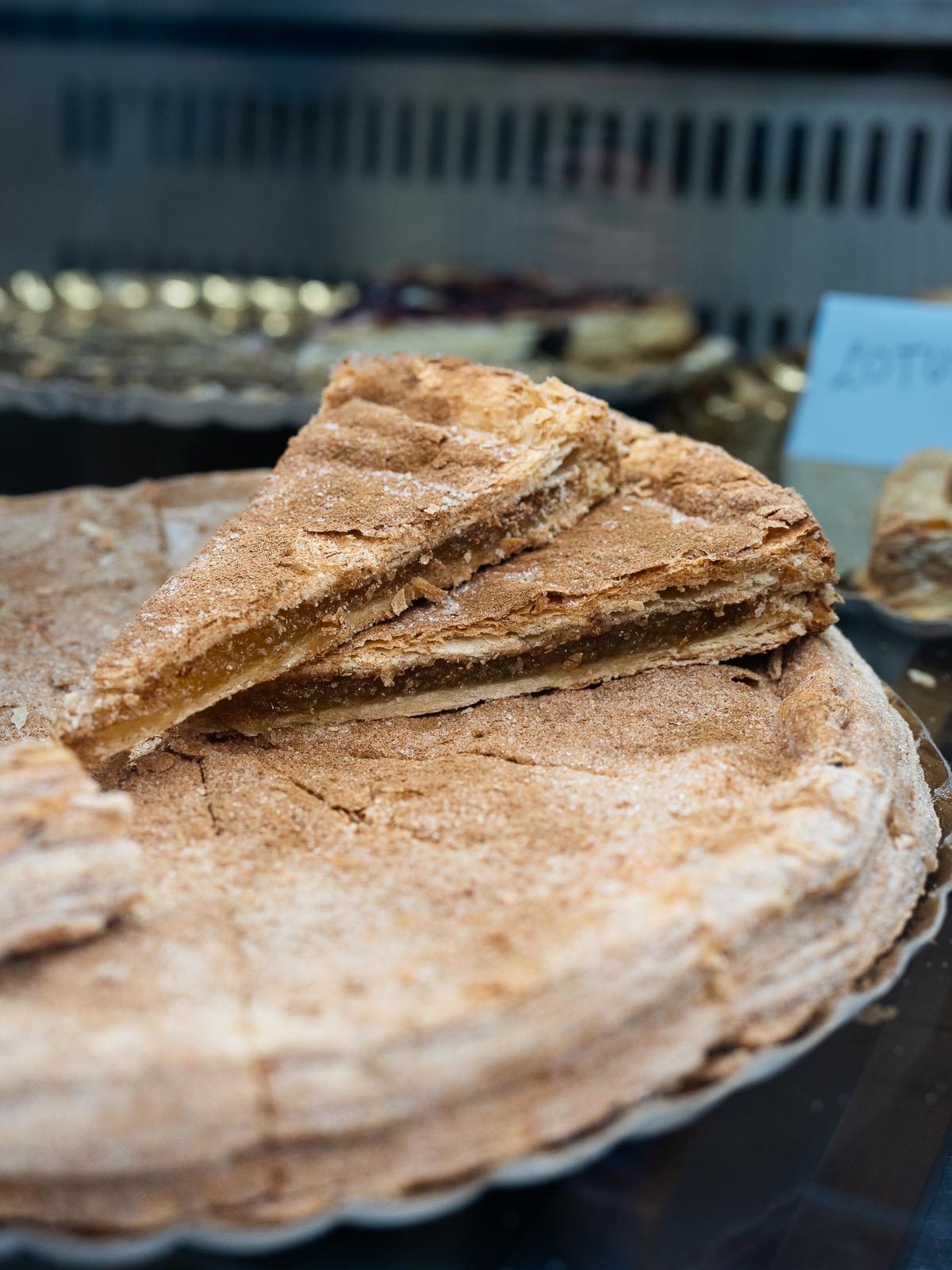
Before heading to the station, we picked up a Pastel Cordobés, Córdoba's signature sweet: flaky puff pastry filled with "cabello de ángel", a candied pumpkin jam. It's delicate, just sweet enough, and the perfect end to a full day of walking and tasting.
Andalusia Itinerary Ideas (For Conscious Travelers)
If you're planning a trip through southern Spain, Córdoba makes a perfect mid-point between Andalusia's coastal towns and Madrid. Here's an itinerary we recommend, using train and bus routes:
- Start in Cádiz. Long beaches, surf towns, and sun-drenched food. → Beaches in Cádiz
- Head to Málaga. Our home base-sunny, full of color, and great for plant-based foodies. → One Day in Málaga
- Take day trips to Frigiliana and Nerja. Frigiliana for whitewashed streets and mountain air, Nerja for cliffs and beaches.
- Stop in Córdoba. Historic, compact, flavorful, and full of soul.
- Continue to Madrid or Granada. (Posts coming soon!)
This route blends coast, countryside, and culture-all without needing a car.
Final Thoughts
One day in Córdoba reminded us why we travel in the first place: to reconnect. With friends, with flavors, with places that surprise us in the best ways.
We went for a day, but we left full-of good food, new stories, and that quiet glow that only a slow, spontaneous journey can offer.



Comments
No Comments